What is ecology
Автор: Ланько Юлия Васильевна
Организация: НИУ БелГУ
Населенный пункт: Белгородская область, г. Белгород
Ecology is the science of the connections between living beings and their environment. The word "ecology" consists of two Greek words: "ecos", which means "home", and "logos" - science. But the word "house" in ecology does not mean that, or, more precisely, not only the dwelling in which a particular family, individual, or even a group of people lives. The word "home" here means the whole planet, the world - the house in which all people live. And, of course, in different sections of ecology, individual "rooms" of this "house" are considered.
Ecology studies everything that somehow interacts or affects living organisms. This is a very voluminous science that touches on a good hundred topical issues for humans and their life on earth.
All creatures on Earth do not live by themselves, but in interaction with each other and with the environment that surrounds them. It is these interactions that ecology studies. As long as there is a balance in nature (plants have enough soil nutrients, animals have enough plant matter, and humans have enough food and resources), ecology remains a desk science that people don't know much about. But as soon as the balance is disrupted, an environmental crisis arises, and this science becomes one of the most important.
The young ecology "emerged" from the big and old science of biology. In turn, the new science has managed to form many sub-sciences.
Let's list at least some of them: plant ecology, animal ecology, archaeoecology, ecology of steppes (deserts, tundra, mountains, forests...), ocean ecology, space ecology, atmospheric ecology, human ecology, urban ecology, global ecology.
Any living being (including humans) is connected by a multitude of invisible threads to everything that surrounds it: with inanimate nature, with other organisms, with what is created by human hands. It is these invisible threads - ecological connections - that ecology studies.
Environmental relations groups:
1. Living and inanimate;
2. Plants and animals;
3. Animal and animal;
4. Man and nature.
There are several types of ecology:
The ecology of the biosphere, where the human environment is thoroughly studied, as well as global problems and changes.
Industrial ecology, which studies the impact of human activities related to industrial production on the environment.
Industrial ecology considers each branch of human cognition separately, and they are of great interest for research.
Agricultural ecology reveals patterns of the impact of agricultural enterprises and facilities on nature.
The ecology of evolutionary development considers evolutionary processes, the results of their impact on the external environment.
Valeology, which examines the quality of human existence and health. It helps well in medicine.
Geoecology conducts research in the field of the geosphere and the inhabitants of the Earth.
Marine and oceanic ecology, aimed at addressing issues of water pollution and correcting the situation.
Social ecology, which considers cleanliness in the field of social problems.
The ecology of economics, which pays attention to the constant development of algorithms to solve problems of concern to humanity in the form of rational allocation and exploitation of resources.
Опубликовано: 24.04.2026
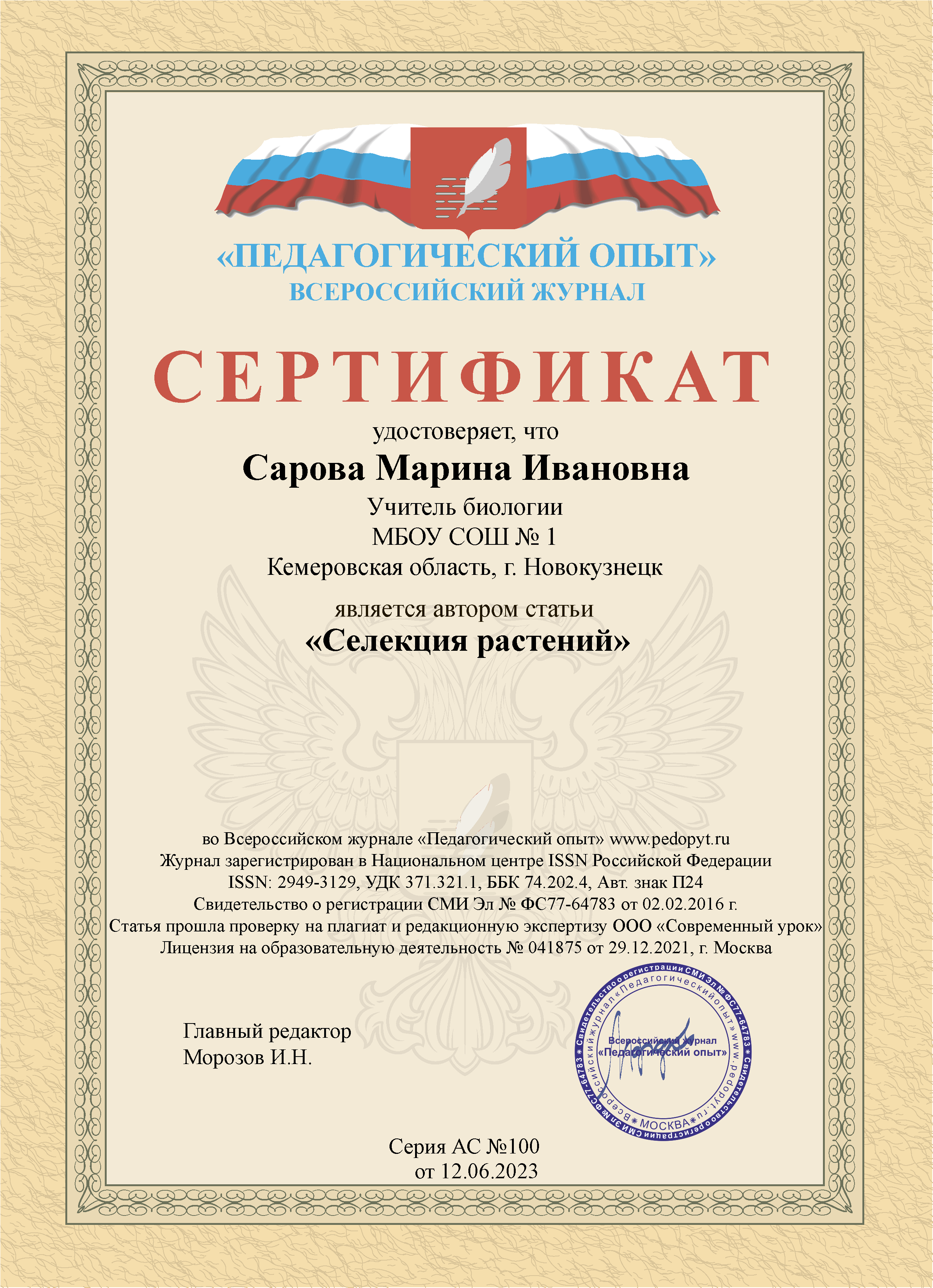
Пример сертификата за публикацию статьи
Пример диплома за конкурс
Пример бумажного диплома
Регистрация в Федеральной службе по надзору в сфере связи, информационных технологий и массовых коммуникаций (Роскомнадзор)

Регистрация в Национальном центре ISSN Российской Федерации: 2949-3129