Psychological problems of children with speech disorders
Автор: Миронова Татьяна Андреевна
Организация: МДОУ Детский сад № 3 комбинированного вида
Населенный пункт: Белгородская область, г. Валуйки
Abstract: The article discusses the main psychological difficulties faced by children with speech disorders. The interrelationships between speech defects and the features of the emotional-volitional sphere, self-esteem, interpersonal interaction and cognitive processes are analyzed. Special attention is paid to the impact of speech disorders on the development of a child's personality and his adaptation to society.
Keywords: speech disorders, children, psychology, emotional problems, self-esteem, social adaptation, cognitive impairments.
Speech disorders in children are one of the most common problems in child psychology and pedagogy. They have a significant impact not only on the child's communication abilities, but also affect the deeper aspects of his mental development. Deficiencies in speech activity can cause serious psychological problems, which, in turn, worsen the underlying speech disorder, closing the vicious circle. Understanding these relationships is extremely important for developing effective strategies for correctional work and creating a favorable environment for the harmonious development of the child.
The impact of speech disorders on the emotional sphere
Children with speech disorders often have difficulty expressing their emotions and experiences. The inability to adequately verbalize one's feelings can lead to the accumulation of negative emotions such as anxiety, fear, frustration, and anger. The feeling of one's own inferiority, manifested in the inability to communicate freely with peers and adults, causes the child to feel isolated and lonely. Self-doubt, which often accompanies speech defects, can manifest itself in increased irritability, tearfulness, or, conversely, in isolation and avoidance of social contacts.
Self-esteem and interpersonal relationships
Speech disorders have a direct impact on the formation of a child's self-esteem. Failures in communication, ridicule from peers, misunderstanding from adults – all this undermines children's self-confidence, forming low self-esteem. The child begins to perceive himself as "different", "not like everyone else", which makes it difficult to establish trusting relationships with others. Difficulties in verbal communication can lead to isolation, difficulties in forming friendships, which, in turn, slows down social development and impoverishes the emotional experience of the child.
Cognitive aspects and ways of overcoming
In addition to emotional and social difficulties, speech disorders can also affect cognitive processes. For example, phonemic hearing, which is closely related to speech development, plays an important role in the assimilation of written speech. Difficulties with concentration, memory, and logical thinking can also result from or accompany speech disorders. To successfully correct the psychological problems of children with speech disorders, a comprehensive approach is needed, including speech therapy, psychological support, self-esteem correction and the development of communication skills. It is important to work on the formation of an adequate attitude to speech peculiarities on the part of all participants in the educational process.
The successful overcoming of psychological problems in children with speech disorders largely depends on the proper organization of the developing environment. This environment should be not only stimulating, but also gentle, devoid of excessive pressure and criticism. It is important to create situations in which the child feels successful, even if it concerns non-verbal areas. Encouraging any, even the slightest, success in communication and self-expression helps strengthen his self-confidence.
Of particular importance is the formation of an adequate attitude towards speech disorders on the part of parents and teachers. It is not necessary to focus the child's attention on his defect, but rather focus on his strengths. Excessive care or, conversely, ignoring the problem can be harmful. Parents need to learn to accept their child for who he is, showing patience, understanding and unconditional love.
An integral part of correctional work is the development of social adaptation skills. This includes training in effective communication methods, the ability to constructively resolve conflict situations, and the formation of empathy and cooperative skills. Games, trainings, and group activities aimed at developing communicative competence contribute to the integration of the child into the team and the formation of positive interpersonal relationships.
An important role is played by the interaction of specialists: speech therapists, psychologists, speech pathologists, teachers. A clear division of responsibilities and a unified approach to correctional and developmental work allow us to achieve the best results. The exchange of information about the dynamics of a child's development, his successes and difficulties contributes to the creation of a holistic and effective support system.
In conclusion, we can say that the psychological problems of children with speech disorders are complex and require a systematic approach to their solution. Only through the joint efforts of parents, teachers and specialists, with the use of adequate correctional techniques and the creation of a favorable developmental environment, it is possible to achieve positive dynamics in the development of a child's personality, increase his self-esteem and successfully adapt to society.
List of literature:
1. Arkhipova E.F. Speech therapy work with children suffering from stuttering. Moscow: Prosveshchenie, 2007.
2. Volkovskaya T.N. Psychological features of children with complex speech disorders. Moscow, 2008.
3. Semenovich A.V. Neuropsychological diagnostics and correction in childhood. Moscow: Akademiya, 2000.
Опубликовано: 24.02.2026
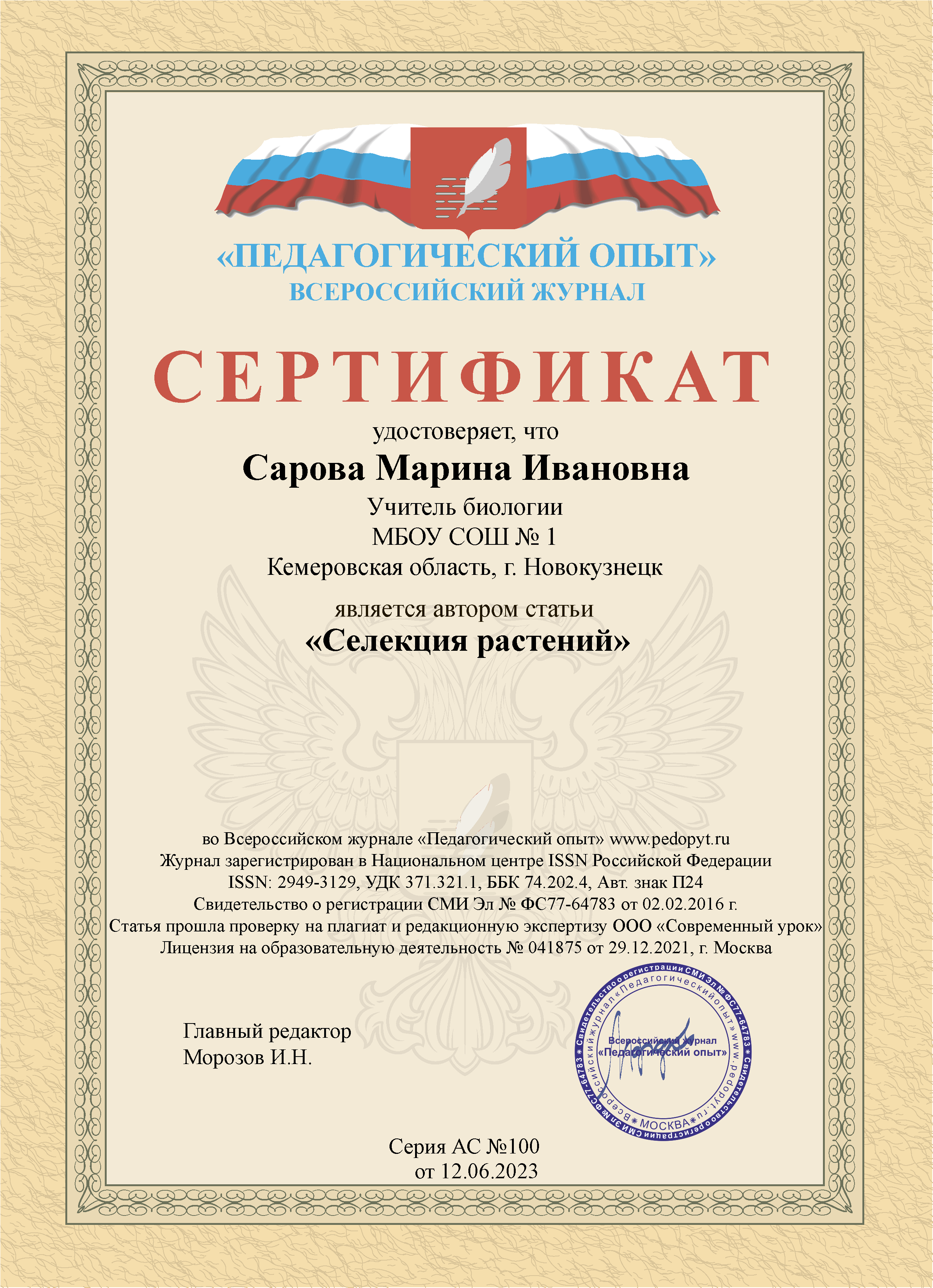
Пример сертификата за публикацию статьи
Пример диплома за конкурс
Пример бумажного диплома
Регистрация в Федеральной службе по надзору в сфере связи, информационных технологий и массовых коммуникаций (Роскомнадзор)

Регистрация в Национальном центре ISSN Российской Федерации: 2949-3129