The Integration of Neuroplasticity Principles in Modern Speech-Language Therapy for Post-Stroke Aphasia: A Review and Future Directions
Автор: Клепинина Анастасия Сергеевна
Организация: НИУ БелГу
Населенный пункт: Белгородская область, г. Белгород
Abstract
Post-stroke aphasia, a language disorder caused by focal brain injury, presents a significant challenge to functional communication and quality of life. Traditional therapeutic approaches have often relied on compensatory strategies and drill-based exercises. However, the last two decades have witnessed a paradigm shift towards therapies underpinned by principles of neuroplasticity—the brain's inherent capacity to reorganize and form new neural connections. This article reviews the core principles of neuroplasticity (use-it-or-lose-it, use-it-and-improve-it, specificity, repetition, intensity, salience, age, and transference) and their explicit application in contemporary aphasia therapy. We examine evidence-based methodologies such as Constraint-Induced Aphasia Therapy (CIAT), which promotes the "use" of verbal output, and Melodic Intonation Therapy (MIT), which leverages intact right-hemisphere networks for prosodic processing. Furthermore, the role of intensive, repetitive, and salient training is discussed in the context of lexical retrieval and syntactic mapping programs. The paper also explores the synergistic potential of combining neuroplasticity-based behavioral therapy with non-invasive brain stimulation (e.g., tDCS, TMS) to modulate cortical excitability and enhance learning. Finally, we identify future directions, including personalized therapy protocols based on neuroimaging biomarkers, the integration of home-based digital tools for massed practice, and the need for more longitudinal studies to assess the sustainability of neuroplastic changes. This synthesis argues that the conscious application of neuroplasticity principles is fundamental for developing more effective, efficient, and neurologically informed interventions for aphasia rehabilitation.
Keywords: Aphasia, Neuroplasticity, Speech-Language Therapy, Rehabilitation, Constraint-Induced Therapy, Non-Invasive Brain Stimulation, Neurorehabilitation.
1. Introduction
Aphasia, affecting approximately one-third of stroke survivors, disrupts the core components of language: phonology, semantics, syntax, and pragmatics. The historical foundation of aphasia therapy was largely rooted in behavioral models, focusing on symptom reduction through structured tasks. While often beneficial, outcomes could plateau. The discovery of lifelong neuroplasticity revolutionized neurological rehabilitation, offering a scientific framework to understand how therapy drives recovery at a neural level. This article posits that the most advanced contemporary logopedic (speech-language pathology) practice is characterized by the deliberate design of interventions that align with these empirically derived principles of brain reorganization.
2. Neuroplasticity: Core Principles for Rehabilitation
Neuroplasticity is not a monolithic concept but a set of governing principles for experience-dependent neural change. Key principles directly relevant to aphasia therapy include:
- Use-it-and-improve-it / Use-it-or-lose-it: Functional neural circuits are strengthened with use and weakened with disuse.
- Specificity: The nature of the training dictates the nature of the plastic change.
- Repetition and Intensity: Sufficient dosage and frequency of practice are required to induce and consolidate new learning.
- Salience: The training must be meaningful and motivating to the individual to optimally engage learning mechanisms.
- Transference: Plasticity in one set of neural circuits can promote learning in related circuits.
- Age: While plasticity is lifelong, it is generally more robust in younger brains, though not absent in older adults.
3. Application in Evidence-Based Therapeutic Approaches
Modern interventions explicitly incorporate these principles.
Constraint-Induced Aphasia Therapy (CIAT): This protocol directly applies "use-it-and-improve-it" by constraining the use of non-verbal communication (e.g., gestures, drawing) and ensively shaping verbal output in a massed practice format. It promotes cortical reorganization in and around language areas by forcing targeted neural activation.
Melodic Intonation Therapy (MIT): For individuals with non-fluent aphasia and relatively preserved auditory comprehension, MIT leverages the "specificity" and "transference" principles. It uses the melodic and prosodic capacities of the intact right hemisphere to facilitate access to lexical and syntactic information, eventually transferring this access back to the left hemisphere's traditional language zones.
Semantic Feature Analysis (SFA) and Phonological Components Analysis (PCA): These word-finding therapies employ "repetition," "intensity," and "salience." By systematically and repeatedly analyzing the semantic or phonological attributes of target words within personally relevant contexts, they strengthen degraded neural networks for lexical retrieval.
4. Adjunctive Neuromodulation Techniques
To further potentiate neuroplasticity, behavioral therapies are increasingly paired with neuromodulation.
Transcranial Direct Current Stimulation (tDCS) / Repetitive Transcranial Magnetic Stimulation (rTMS): These techniques can temporarily increase (via anodal tDCS or high-frequency rTMS) or decrease (via cathodal tDCS or low-frequency rTMS) cortical excitability in targeted regions. For example, applying anodal tDCS over the left inferior frontal gyrus during naming therapy may lower the neural threshold for activation, enhancing the "use-it-and-improve-it" effect of the behavioral practice.
5. Future Directions and Challenges
The field continues to evolve with several promising frontiers:
Personalized Medicine: Using fMRI or DTI to identify individual patterns of neural disruption and residual connectivity to tailor therapy type, intensity, and neuromodulation target.
Technology-Enabled Rehabilitation: Leveraging tablet- and VR-based applications to deliver high-intensity, repetitive, and salient practice in ecologically valid and accessible home settings, addressing the critical "dosage" challenge.
Mechanistic Studies: More research is needed to directly link specific behavioral therapy parameters with measurable neuroplastic changes (e.g., synaptic density, white matter integrity) and long-term functional outcomes.
6. Conclusion
The integration of neuroplasticity principles marks a new era in logopedic science, moving therapy from a purely behavioral art to a neuroscience-informed discipline. By designing interventions that are intensive, repetitive, specific, and salient, speech-language pathologists can more effectively harness the brain's innate capacity for reorganization. The convergence of advanced behavioral protocols, neuromodulation, neuroimaging, and digital technology holds unprecedented potential for optimizing recovery and improving the lives of individuals with post-stroke aphasia. Future research must focus on refining these protocols, personalizing their application, and validating their long-term efficacy through both behavioral and neurological outcome measures.
References (Illustrative examples only)
1. Kleim, J. A., & Jones, T. A. (2008). Principles of experience-dependent neural plasticity: implications for rehabilitation after brain damage. Journal of Speech, Language, and Hearing Research, 51(1), S225-S239.
2. Pulvermüller, F., et al. (2001). Constraint-induced therapy of chronic aphasia after stroke. Stroke, 32(7), 1621-1626.
3. Norton, A., Zipse, L., Marchina, S., & Schlaug, G. (2009). Melodic Intonation Therapy: shared insights on how it is done and why it might help. Annals of the New York Academy of Sciences, 1169, 431-436.
4. Fridriksson, J., et al. (2018). Transcranial direct current stimulation vs sham stimulation to treat aphasia after stroke: a randomized clinical trial. JAMA Neurology, 75(12), 1470-1476.
5. Kiran, S., & Thompson, C. K. (2019). Neuroplasticity of language networks in aphasia: Advances, updates, and future challenges. Frontiers in Neurology, 10, 295. int
Опубликовано: 29.01.2026
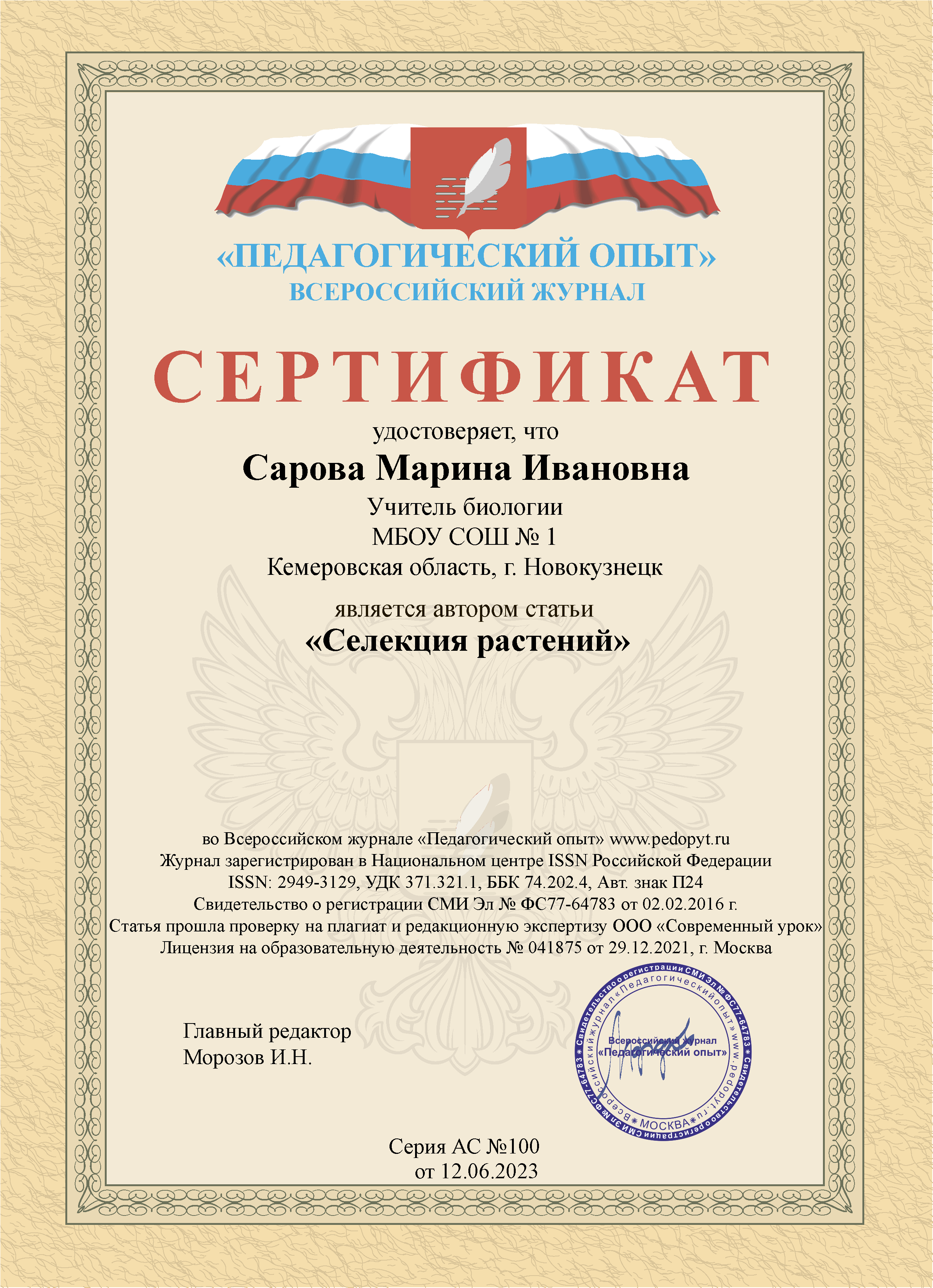
Пример сертификата за публикацию статьи
Пример диплома за конкурс
Пример бумажного диплома
Регистрация в Федеральной службе по надзору в сфере связи, информационных технологий и массовых коммуникаций (Роскомнадзор)

Регистрация в Национальном центре ISSN Российской Федерации: 2949-3129