Developing communication skills in children with ASD through play based methods
Автор: Бывалина Мария Яновна
Организация: МБОУ «Котовская ООШ»
Населенный пункт: Белгородская область, с. Котово
Working with children who have autism spectrum disorder (ASD) requires a special approach, especially when it comes to developing communication skills. Such children often experience difficulties in making eye contact, understanding non‑verbal cues, initiating and maintaining a dialogue, as well as expressing their own needs and emotions. Traditional teaching methods are often ineffective due to increased anxiety and resistance to new demands. In this situation, play‑based methods become a powerful tool for creating a safe and motivating environment for communication development.
Play naturally attracts a child’s attention, reduces stress levels, and provides an opportunity to simulate social situations under controlled conditions. Through play, children with ASD learn to interact with others, understand other people’s emotions, express their own desires, and respond to communication attempts. The key advantage of the play‑based approach is that it builds on the child’s interests: if an activity genuinely engages them, the likelihood of successfully acquiring new skills increases significantly.
When organising play activities, it is important to take into account each child’s individual characteristics their developmental level, sensory preferences, favourite activities, and readiness for interaction. It is best to start with simple sensory games that evoke positive emotions and help establish a trusting connection. For example, games with soap bubbles, water, sand, or kinetic sand do not require complex communication but create an atmosphere of joy and safety. Gradually, as the child becomes more comfortable, you can introduce elements of interaction: taking turns passing objects, repeating simple actions while accompanying them with short comments.
One of the first steps in communication development is building joint attention skills. Games where the adult and child observe a process together are well‑suited for this purpose: spinning a top, watching ice melt, or following the movement of a toy train. During this, the adult describes what is happening, pointing out key details: “Look, the train is moving! Over there, around the bend!” Such shared observations help the child learn to focus on the same object as the communication partner — and this is the foundation for further dialogue development.
The next stage is developing non‑verbal communication. Children with ASD often struggle with understanding and using gestures, facial expressions, and intonation. To help them master these skills, play‑based exercises can be used. For instance, the “Show the emotion” game with cards depicting various feelings teaches the child to recognise and reproduce emotions. The adult shows a card with an image of joy or sadness, and the child must imitate the corresponding facial expression. Gradually, you can increase the difficulty by asking the child to portray an emotion in a specific situation: “Show how you feel when you get a present” or “Show how upset you are when a toy breaks.”
As non‑verbal skills are mastered, elements of verbal interaction can be introduced. Simple sound games such as “Repeat the sound” or “What’s making that noise?” stimulate speech activity. The adult makes sounds —“aa,” “boom,” “tap” - and encourages the child to repeat them. Then, you can move on to short words and phrases related to favourite toys or activities: “Give me the ball,” “More swinging,” “Yummy!” It is important to encourage any communication attempts — even if the child is not yet speaking and uses gestures or PECS cards instead, this is already a step forward.
Role‑playing games open up new opportunities for developing dialogic speech and social skills. In a safe play environment, the child can practise typical everyday situations: going to the shop, visiting the doctor, having tea with toys. For example, in the “Shop” game, the adult and child take on the roles of shopkeeper and customer. The child learns to formulate requests: “Please give me an apple,” “How much does it cost?”, “Thank you!” In the “Doctor” game, they practise phrases related to describing their condition: “My throat hurts,” “Listen to me with the stethoscope.” Such scenarios not only expand vocabulary but also teach the rules of social interaction: taking turns, being polite, and responding to the communication partner’s remarks.
Consistency and repetition of play activities are especially important. New skills are consolidated only through regular practice, so it is essential to incorporate mastered games into daily routines. For example, if a child has learned to ask for a toy using a gesture or a word, this situation can be modelled in different settings: at home, during a walk, or when visiting others. Visual supports — cards, pictograms, schedules — help structure the game and make the rules clearer.
The role of parents and close adults is equally important. Learning should not be limited to sessions with a specialist: parents can use play‑based techniques at home, turning everyday situations into opportunities for communication practice. For instance, while preparing food, you could invite the child to choose an ingredient (“What should we add to the salad — cucumber or tomato?”) and ask them to name the chosen item. During a walk, you can play “Guess what I see”: the adult describes an object (“It’s green and grows on a tree”), and the child tries to guess and name it.
Developing communication skills in children with ASD is a long process that requires patience. However, the systematic use of play‑based methods yields sustainable results. Children begin to use speech or alternative communication methods more frequently, better understand the emotions of others, and adapt more successfully in society. The key condition for success is the adult’s genuine engagement, willingness to follow the child’s interests, and recognition of even the smallest achievements.
Опубликовано: 16.03.2026
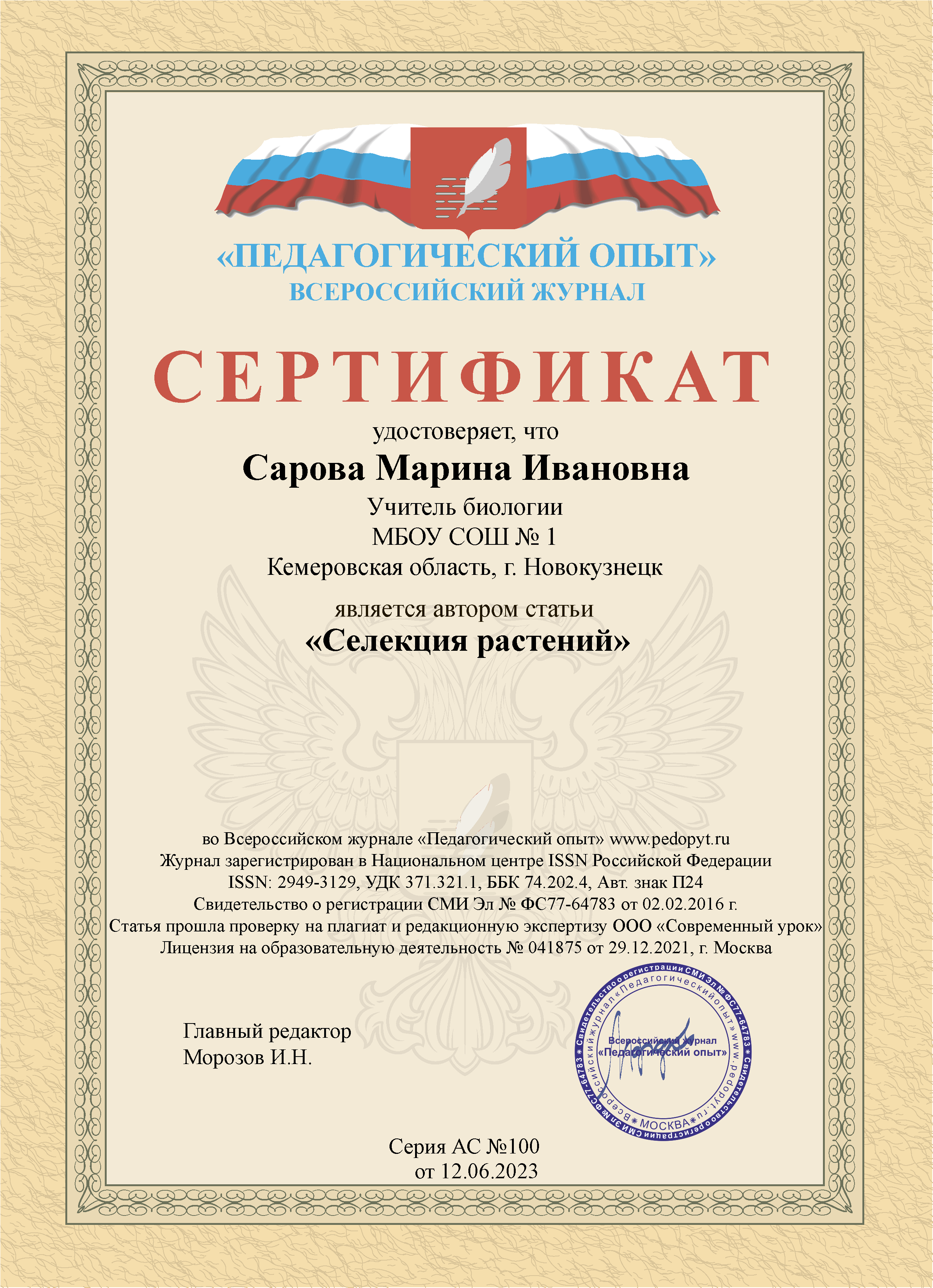
Пример сертификата за публикацию статьи
Пример диплома за конкурс
Пример бумажного диплома
Регистрация в Федеральной службе по надзору в сфере связи, информационных технологий и массовых коммуникаций (Роскомнадзор)

Регистрация в Национальном центре ISSN Российской Федерации: 2949-3129